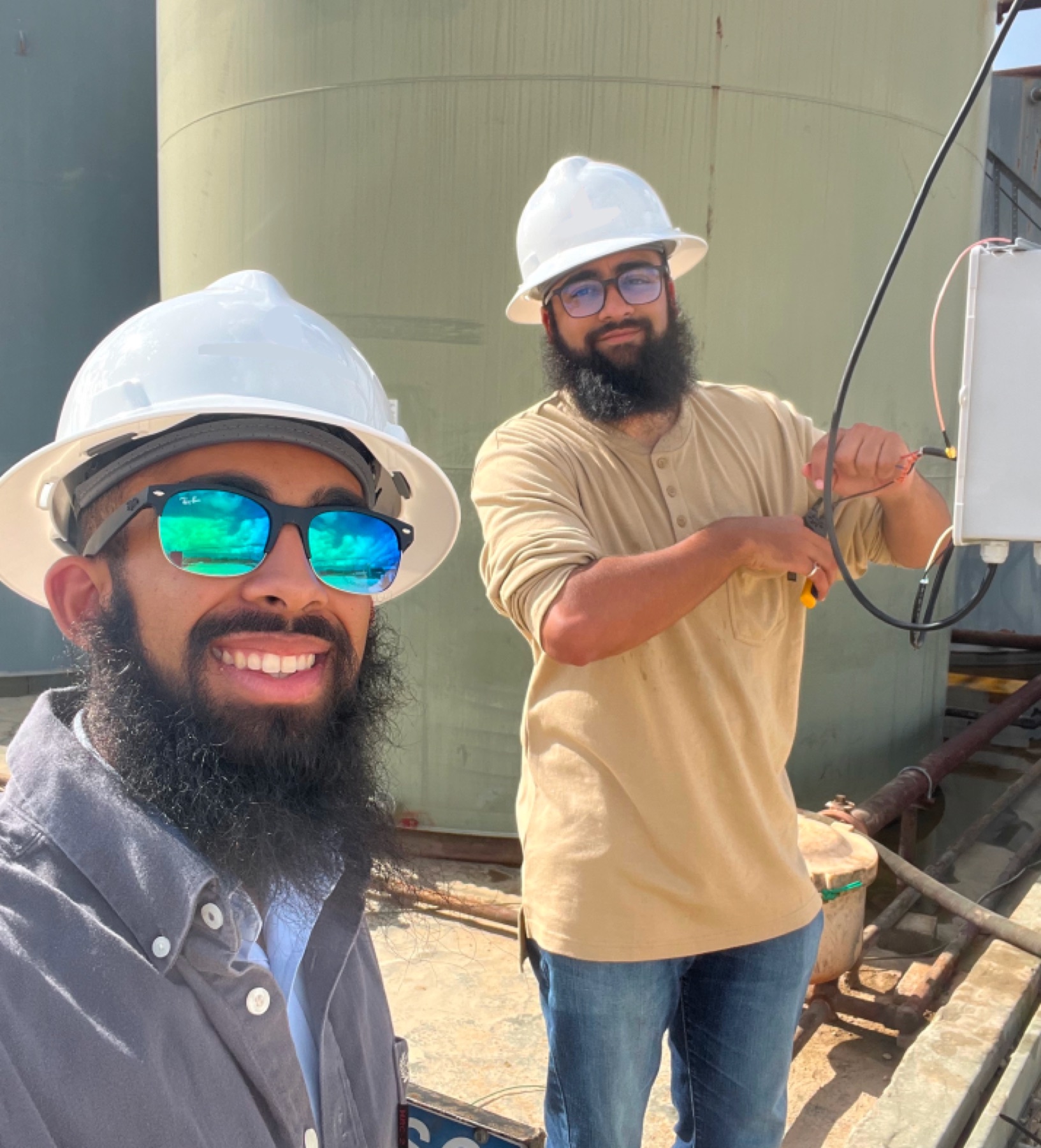
Delivered by the Install IoT founding team under Sensyrtech, 2021 to 2022.
The situation
EOG Resources is one of the largest independent hydrocarbon producers in the United States, running thousands of acres of well pads and compressor stations. Methane leaks from wellhead equipment, pipelines, and storage tanks. Regulation around those leaks carries penalties that reach as far as shutting a site down, which makes the emissions sensor network a piece of production infrastructure rather than a reporting nicety.
EOG’s engineering team had already built a system for this in-house. They called it iSense: ESP32 chips reading environmental sensors, pushing to Wi-Fi routers mounted on a central communications tower. The early deployments worked. As it spread across more pads, reliability fell away.
The cause was structural. Wi-Fi was never designed to cover a well pad. Edge-to-center spans ran about 600 feet, with roughly 1000 feet across the site, and at those distances in open industrial terrain the link is fighting power budget, interference, and range at the same time. Every new site meant more tower infrastructure, so the cost of reaching a hundred sites scaled right alongside the site count.
Dustin Upton, EOG’s Solutions Engineering Manager, brought us in with hard constraints:
- Hold 1 to 5 second sampling, the ceiling their existing system could reach
- Cover 600 ft edge-to-center wirelessly
- Cover multiple sites without a gateway per site
- Route over MQTT into EOG’s own servers
- Run the network server locally, keeping data on EOG infrastructure
Those last two rule out most commercial IoT platforms. EOG had no interest in buying a SaaS dashboard. They wanted telemetry delivered into systems they already ran, on hardware they controlled.
There was one more constraint that shaped everything: the wellhead pads sit in remote areas with no cellular coverage. Whatever we built had to form its own network and keep running without leaning on outside connectivity.
What we built
We kept EOG’s sensors and replaced the transport layer underneath them.
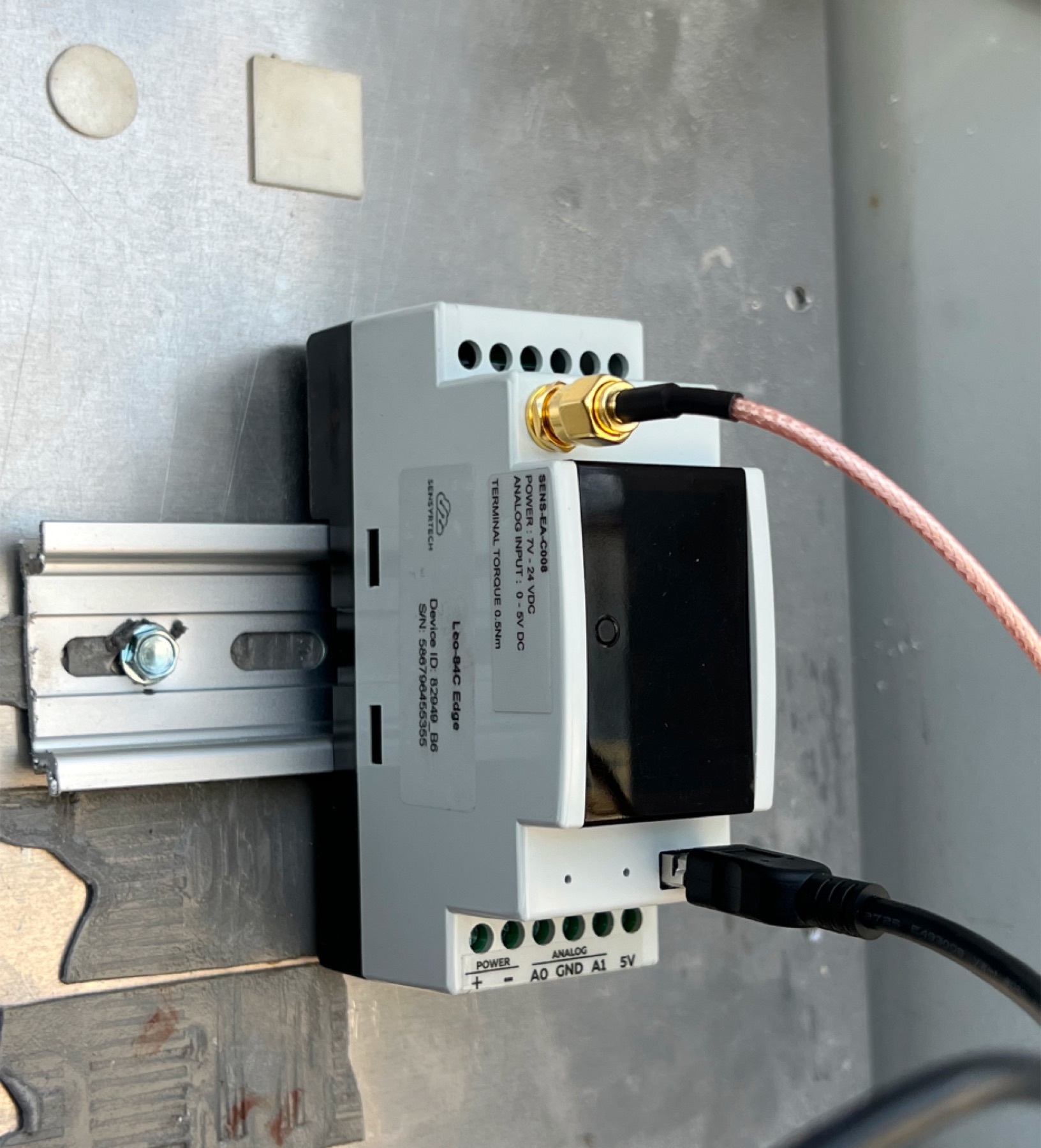
Our edge modules accept the analog signal, 4-20mA and 0 to 5V at 0.01V resolution, straight off the environmental sensors EOG already had mounted, convert it to digital at the sensor, and transmit. No sensor replacement, no re-instrumentation, no argument about whose data it is.
Four modules went in at the four corners of the wellhead pad. Methane concentration is measured continuously in parts per million and pushed across the network.
Wind data, so a reading becomes a location
Knowing methane is present tells an operator little. A concentration spike at one corner of a pad could come from a tank, a flange, a compressor, or a length of pipeline thirty feet away, and sending someone to walk the site with a sniffer is exactly the manual process this system exists to replace.
We integrated anemometers for wind speed and direction, wired directly into the same edge modules as the methane sensors. Same module, same timestamp, so gas concentration and wind vector stay synchronized rather than arriving as two streams somebody has to reconcile later.
EOG’s own data science team ran the dispersion models. Their algorithms took our concentration and wind data and worked backward to the likely source, generating live heat maps that pointed operators at specific equipment. We built the instrument layer and the transport; they brought the modeling. That division stayed clean for the whole engagement.
Changing the radio partway through
We scoped, quoted, and signed this project as a LoRaWAN system on the 915 MHz stack, with private network server instances at the edge. During field testing we moved it to an XBee mesh on ZigBee at 2.4 GHz instead.
The reason was measurable. LoRaWAN runs a star topology, with every node reporting to one central gateway. That is efficient for sensors waking up a few times an hour, and it degrades badly when you ask for a reading every second from multiple nodes at once. Throughput dropped to 60 to 70% in testing. Losing three or four packets in ten is survivable for a temperature trend. For leak detection feeding a dispersion model, gaps in the data are gaps in the map.
The mesh changed the topology. Every node talks to every other node, and one node takes the gateway role dynamically based on network state. No dedicated gateway device to buy, install, or lose. If a node drops, traffic reroutes through another path automatically and the network heals itself without anyone driving out.
Throughput went to 98 to 99%, with reliable reporting every second. Past the ceiling EOG’s own system had, and past the target in our own proposal.
Changing a radio stack after the customer has signed is a conversation nobody looks forward to. We had it, because shipping the architecture on the invoice would have handed EOG a system measurably worse than the one we knew how to build.
Everything else carried over unchanged. Analog capture at the sensor, edge processing on the node so only useful data moves, and delivery into EOG’s servers. Data stayed on EOG infrastructure end to end.
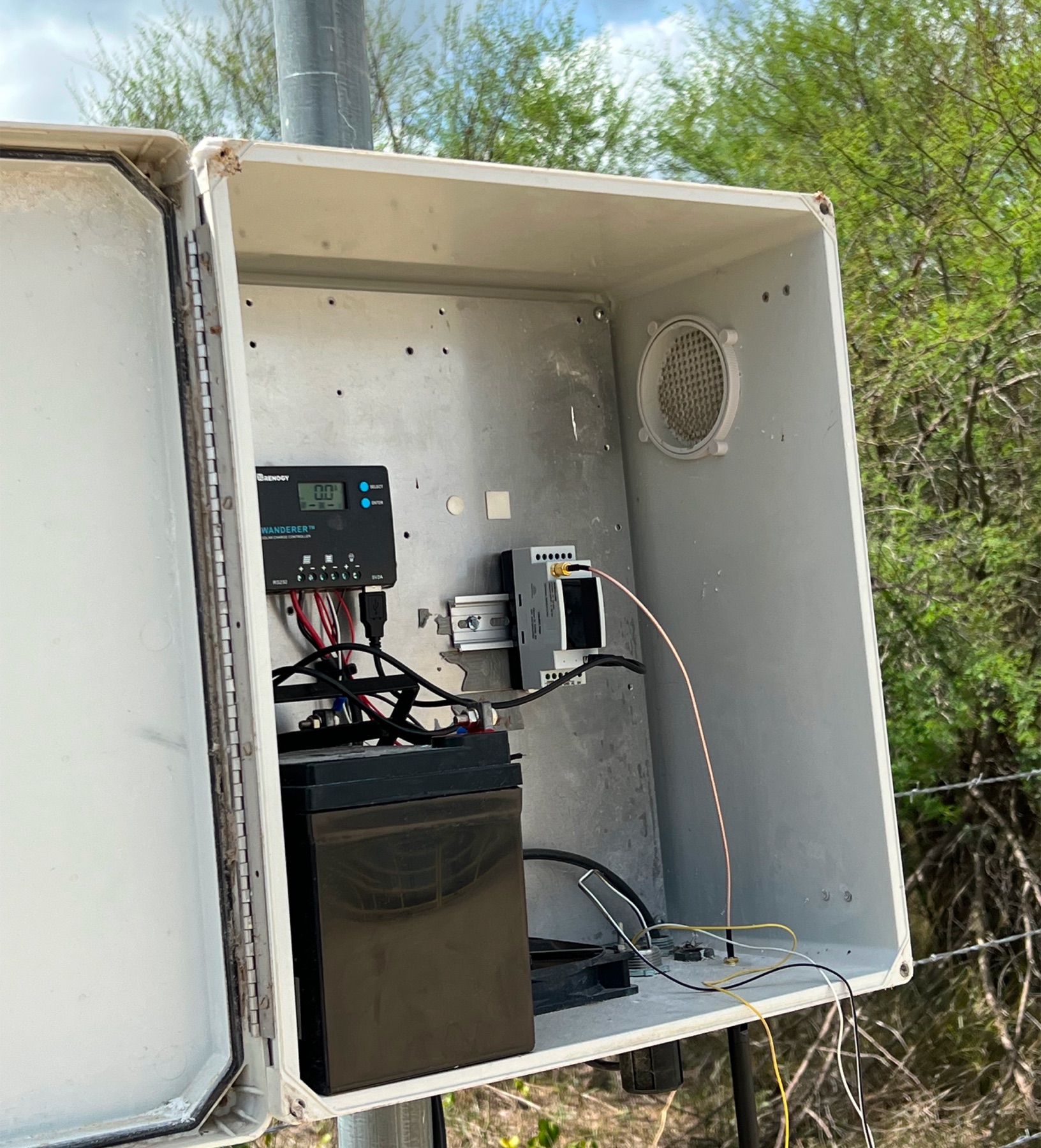
Each node runs on solar with a sealed battery, so nodes go where the measurement needs to happen rather than where the conduit already reaches.
Survey work before hardware
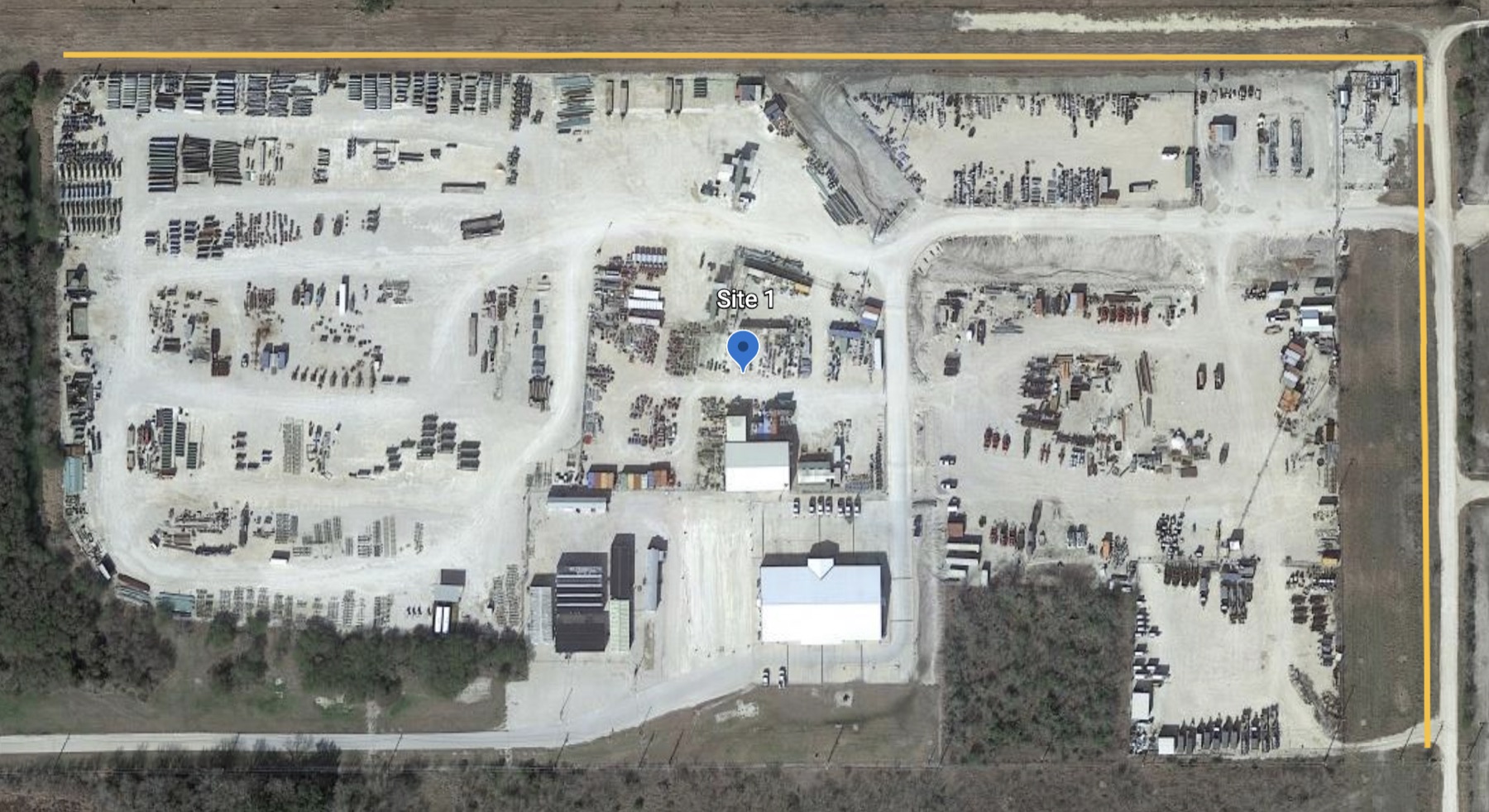
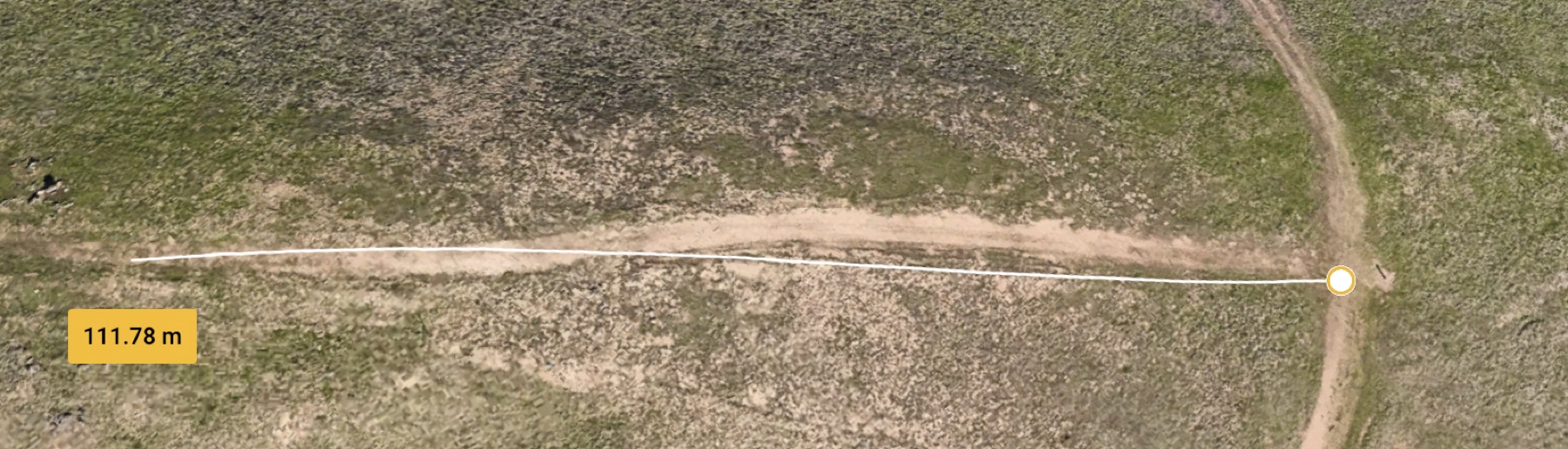
Before anything got mounted, we surveyed both sites for topology, climate, plant asset locations, and signal strength, with hazardous-location placement constraints in mind.
Success criteria, agreed up front
Pass and fail conditions went into the proposal before installation began:
- Edge modules reading existing EM sensors, holding the sampling rate
- Sustained connection into EOG servers with minimal failure rate over two weeks
- Multi-site coverage verified with a field testing device
- Straightforward delivery and setup, minimal coding, configurable by EOG field teams
EOG wrote that last one themselves, and it is the criterion that decides whether a pilot becomes a rollout. A system that field teams cannot configure without an engineer on the phone will never reach a hundred sites, no matter how well it performs on the first one.
The parallel workstream: asset tracking
EOG had a second problem running alongside. High-value mobile assets, high-pressure separators, liquid tanks, generators, compressors, move constantly between pads, and their location was effectively unknown. Field engineers burned production hours hunting for equipment. Conventional per-asset GPS had already been priced and ruled out at EOG’s scale.
We proposed a three-tier architecture built around unit economics: portable BLE beacons with onboard gyroscopes broadcasting on movement, solar Bluetooth gateways covering an 85m zone, and a LoRaWAN gateway aggregating those zones per site. The expensive infrastructure sits at the site, so the marginal cost per asset drops to the price of a beacon instead of a cellular radio plus a subscription.
We mapped 150 assets across two sites, concentrating zone coverage at entry and exit points where movements carry information, then validated it with a live cross-site asset transport.
Results
- 98 to 99% data throughput, up from 60 to 70% on the star topology
- One-second reporting, past the 1 to 5 second target EOG set
- Complete pilot site installation in 2 days
- Self-healing mesh, node failures reroute automatically with no dedicated gateway
- Source identification, synchronized wind and concentration data feeding EOG’s dispersion models and live heat maps
- Existing sensors retained through analog capture at the edge
- Architecture, design, and installation handled A to Z by our team
- 150 assets mapped across 2 sites on the parallel tracking pilot
- Signed MSA executed 2022, alongside SAP vendor waiver and certificate of insurance
What made it work
EOG’s engineers built a working system and then hit its ceiling. Our job was diagnosing which layer had given out, which was transport rather than sensing, and replacing that layer alone while honoring a data-sovereignty requirement most platforms cannot meet.
We also changed our own answer partway through. The proposal said LoRaWAN. Field testing said the mesh, by 30 points of throughput. We told them, and we moved. Keep the sensors, keep the servers, beat the sampling rate, change the radio.
Technologies: XBee mesh (ZigBee 2.4 GHz), LoRaWAN, MQTT, BLE beacons, solar power, 4-20mA and analog-to-digital edge conversion, anemometers, methane detection