Delivered by the Install IoT founding team under Sensyrtech, 2022.
The situation
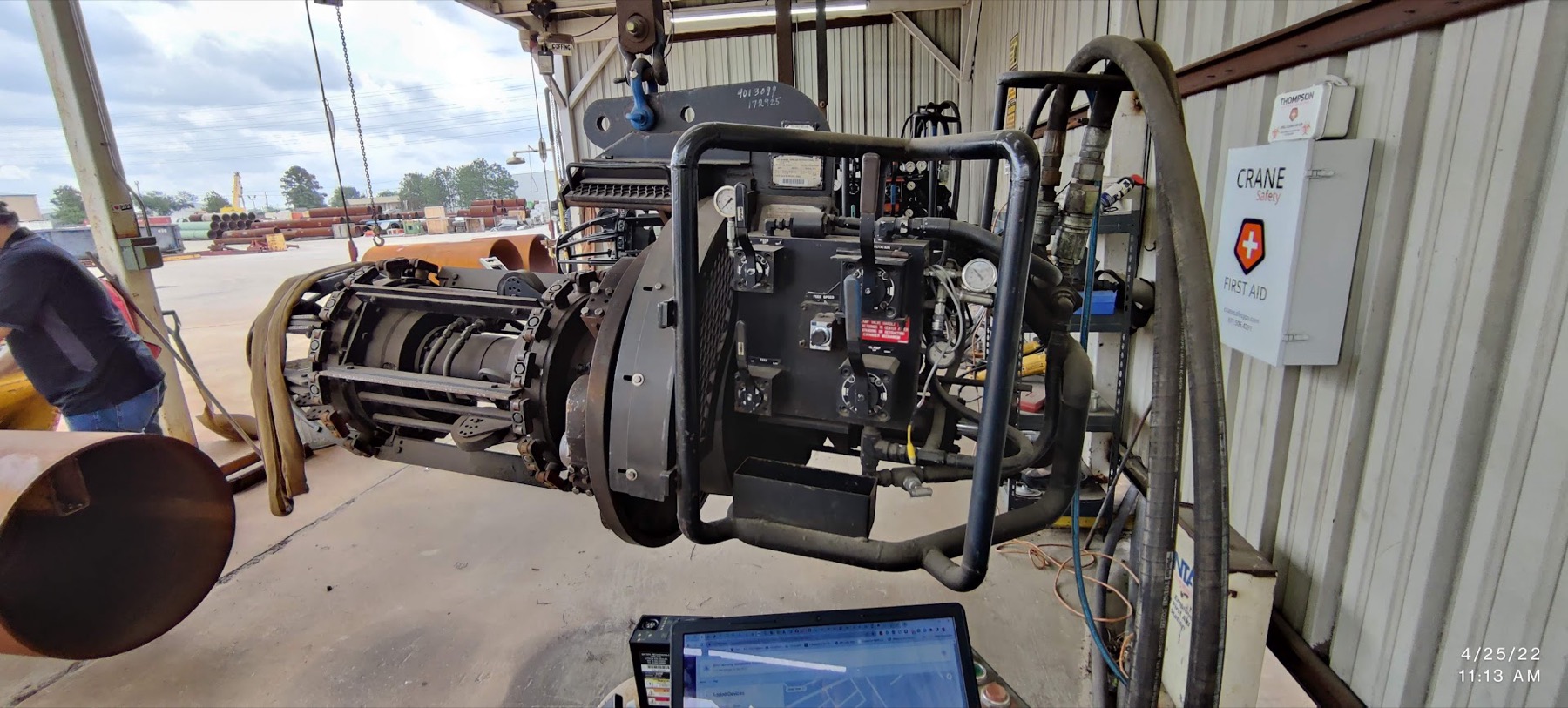
CRC Evans, part of Stanley Black & Decker’s oil and gas division, has built and inspected pipelines for more than 85 years. Automatic welding equipment, pipe benders, field joint coating, inspection services, and a global fleet supporting all of it.
Michael George, VP of Engineering, described the maintenance system as “dumb digital.” Shared spreadsheets and work orders, producing one expensive failure over and over: machines returned to the central Tulsa facility and nobody could say with confidence whether they had already been serviced or which parts had been swapped out. So they were serviced again. Driver boards replaced in the field never made it into a record, and the cost showed up every time the machine came home.
Field conditions made this resistant to the obvious fixes:
- Cellular coverage around 20/80, so most work happens where there is no signal
- Assets insulated inside piping, RF-hostile by construction
- Teams of 15 to 30 technicians on a single asset, many hands and no shared record
- Technicians limited to what they can carry onto a pipeline right-of-way
Consumables used, parts replaced, downtime, notes: none of it could be logged from where the work happened. That knowledge lived in individual heads until the asset reached Oklahoma, and usually evaporated somewhere along the way.
CRC also wanted geolocation and pressure monitoring on high-value rental assets, with alarms that could trigger maintenance before a failure rather than after one. And whatever we built had to feed their existing SAP ERP, so the company kept a single source of truth instead of gaining a second one.
What we built
Three solutions on one architecture, so tracking, condition data, and maintenance history all sat against the same asset record instead of in three systems that disagree.
Maintenance management
A portal provisioned with 10 pilot assets and 10 personnel. Technicians get assigned to incidents, then acknowledge and check in from the field or at a control station, leaving comments and photos against the asset itself. Incident timelines show how long a machine sat in downtime, how long in maintenance, and when it came back operational. Reports auto-generate per incident and stay customizable with parts, inventory, and files attached.
Troubleshooting guides and serial identification live on the asset record, which puts the document in the hands of whoever is holding the wrench instead of behind a phone call to Tulsa.
Asset tracking
We chose the Atlas-33 cellular GPS tracker specifically for the 20/80 connectivity problem. It resolves position through GNSS, Wi-Fi AP MAC address scanning, and cell tower location, with LoRaWAN geolocation as a fallback, so it keeps reporting in the places a GNSS-only device goes silent. Three AA batteries give up to 10 years at daily transmission and 4.5 years at hourly. IP67 rated, with impact detection, intelligent power management, and theft recovery mode.
For assets working where there is no coverage at all, we prepared satellite backhaul through an Orbcomm transmitter, so a machine on a remote right-of-way still reports rather than going dark until it comes home.
Condition monitoring
The Leo-84 edge module wires into TE Connectivity M32JM pressure transducers over I2C, reading up to 5000 psi. We programmed it to filter that signal and recognize pressure cycles, so it counts bends on a pipe bender rather than streaming raw pressure that somebody has to interpret. The same module wires into the 24V button that marks the end of a weld cycle, which gives weld counts off the machine’s own control logic. It relays over Bluetooth 5.2 to the Atlas-33, which uplinks daily.
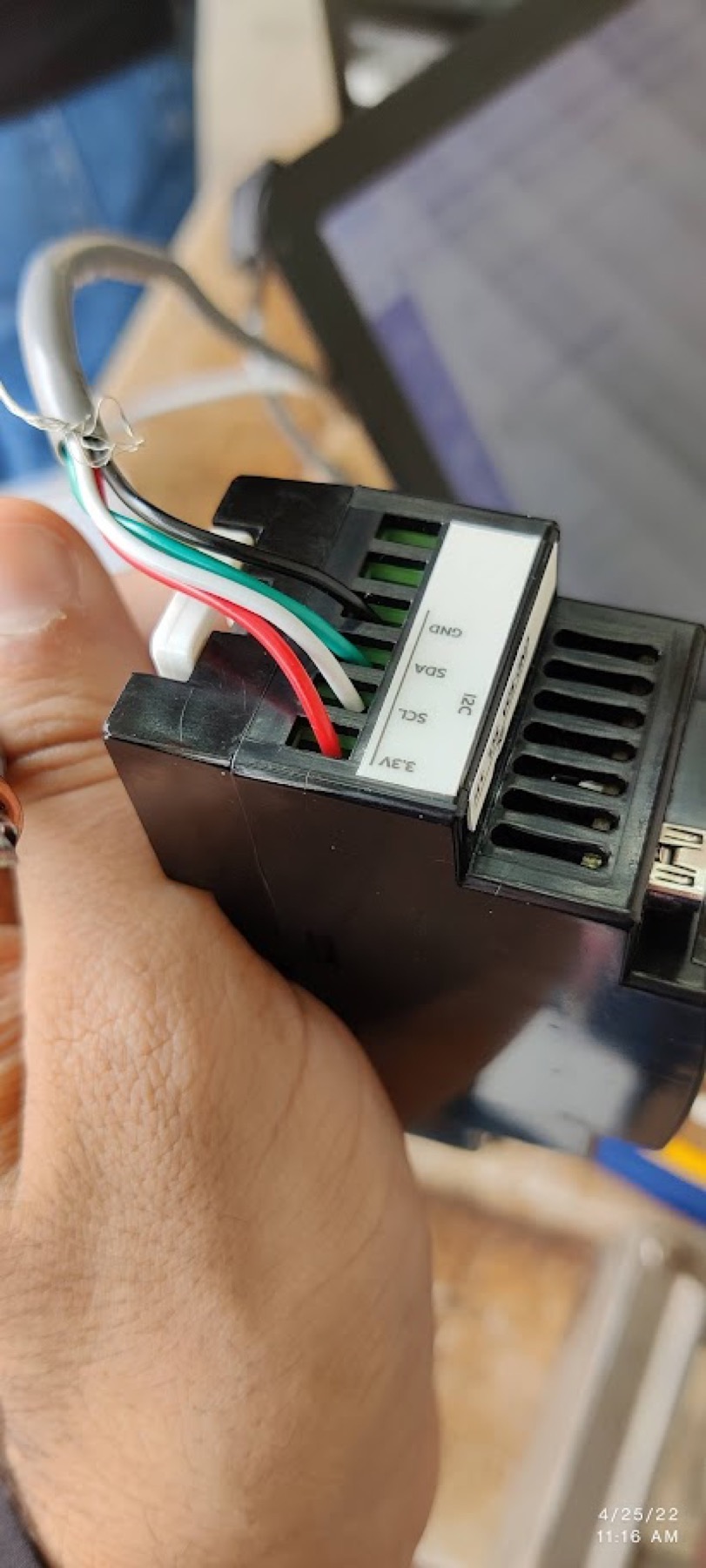
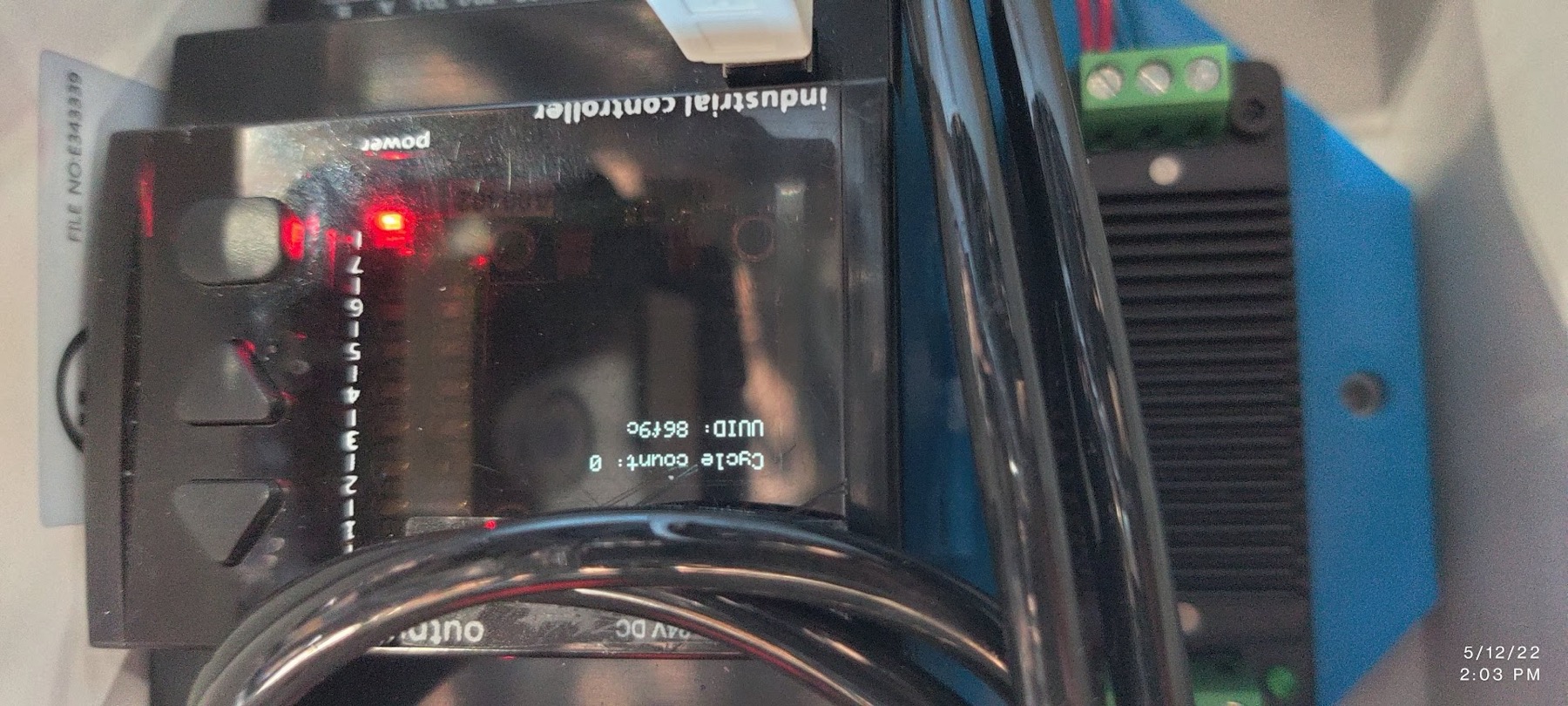
Installation went into the equipment’s existing electrical infrastructure with minimal intrusion, so monitoring never interfered with how the machine normally runs.
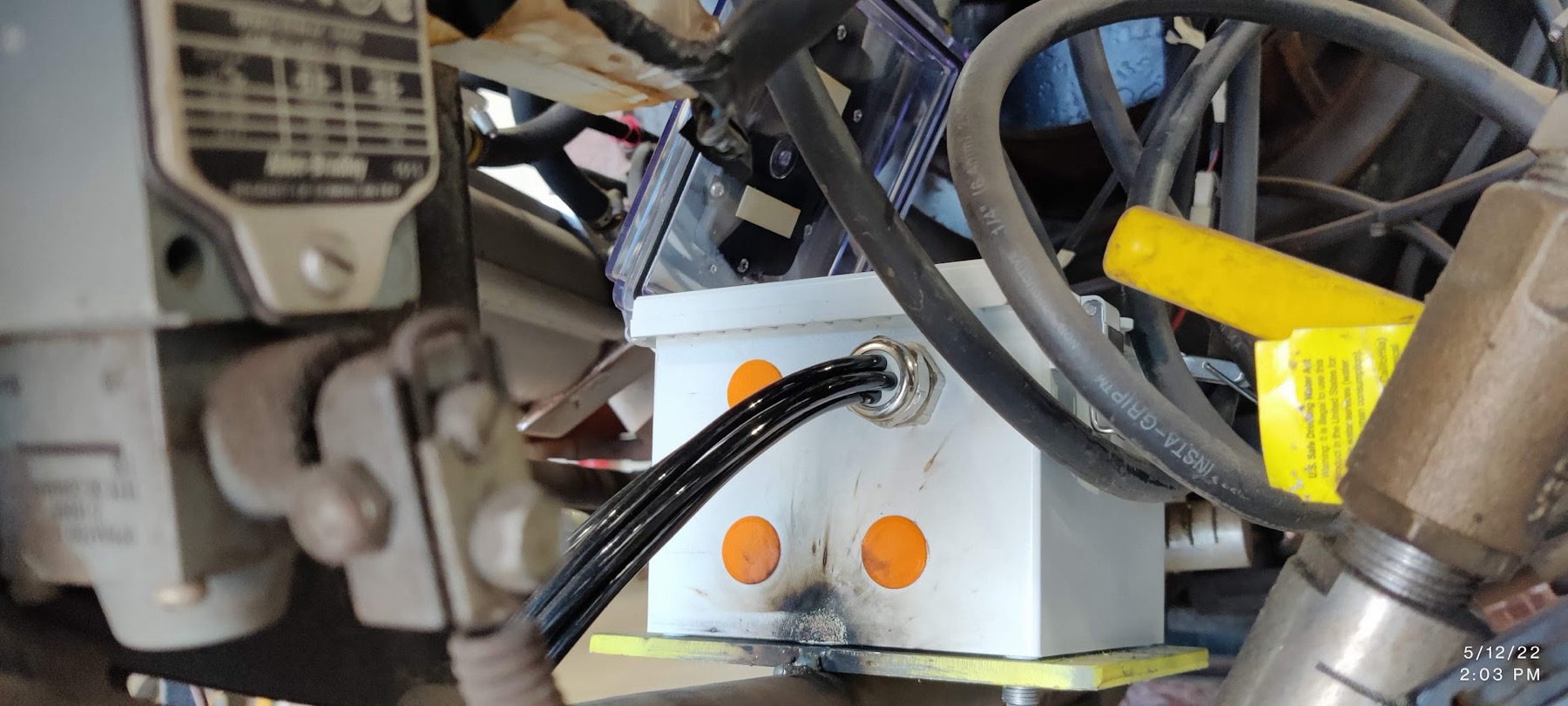
Welds and bends since last service are the two numbers a maintenance planner works from. Everything else is context.
The commercial design
Roughly 70% of CRC’s fleet sits dormant at any given moment, parked in Tulsa between jobs.
Under standard per-asset SaaS pricing, CRC would pay full rate to monitor equipment doing nothing. That caps a deployment at whatever subset happens to be active, which defeats the point: the assets you most need history on are the ones that went out, worked hard, and came back without a record. Every vendor in this category runs into that wall and most of them let the customer hit it.
We built a dormancy discount instead. Assets with no major location change in 30 days bill at 40% of their tier rate, with progressive volume tiers stacking on top so unit price falls as the fleet grows.
On a 1,000-asset fleet at 33% utilization, that comes to $4,217 active plus $3,182 dormant, or $7,399.90 a month. We shipped a calculator alongside the proposal so CRC could model their own fleet rather than take our arithmetic on trust.
Dormant and active are defined by location behavior, which the tracker already reports. The billing model runs itself off the tracking data.
Results
The pilot ran 60 days from installation across Houston and Tulsa, then kept going.
- 10 Atlas-33 trackers and 10 Leo-84 modules deployed, with 10 assets and 10 personnel provisioned
- Pilot extended past its original term, running through September 2022
- 30 additional trackers ordered across three batches in September, October, and November 2022
- Enterprise pricing negotiated for fleet-wide rollout, progressive tiers reaching $4.00 per asset per month
- Purchase orders through SBD procurement
- Dual-mode connectivity confirmed over LTE-M and satellite in low-coverage field conditions
- Weld and bend cycle counting live, reported daily per asset
- SAP integration so asset data landed in the ERP CRC already ran
“By effectively leveraging this data, companies can increase operational efficiency by around 50 to 60%. Your finance teams are efficient, they don’t have to worry about whether the project is invoiced, where’s the cash flow.”
Digital Program Manager
We also absorbed the parts nobody puts in a case study: hardware backorders, a customs hold that delayed a shipment, a mid-stream device substitution when availability shifted, and PO amendments through Fortune 500 procurement. Each one got documented in writing and reconciled against the POs. Enterprise clients form their opinion of a vendor during the quarters when things go sideways, not the ones where everything ships on time.
What made it work
Several vendors could have met the technical scope here. This engagement grew into a fleet rollout because we treated CRC’s real constraint as an economic one and built the commercial model around a fleet that sits idle 70% of the time.
Putting a tracker on a welding machine is easy. Making it affordable to put one on the 700 machines nobody is currently using is what moved the deal.
Technologies: LTE-M, NB-IoT, Orbcomm satellite backhaul, GNSS, Wi-Fi positioning, Bluetooth 5.2, I2C, LoRaWAN geolocation, pressure transducers to 5000 psi, cycle counting, SAP integration, IP67