Delivered by the Install IoT founding team under Sensyrtech, 2021 to 2023.
The situation
Inland Powder Coating is the largest metal coater in Southern California. Powder and liquid coating, sand blasting, and finishing services out of a 5-acre facility in Ontario, running seven assembly lines with three main automatic conveyors.
Measurements were taken by hand and keyed into a native ERP built in Claris FileMaker Pro. That system handled job costing and inventory well. It had no way to answer the question David Flatten, IPC’s owner and president, wanted answered: how fast are the conveyors running, and why is that number below design speed?
Line speed sets the ceiling on everything downstream in a coating shop. A slow line burns oven capacity and labor on fewer parts. When speed wanders, dwell time in the cure oven wanders with it, and cure quality follows. IPC had gone after this data before with wired instrumentation. The quotes came back financially burdensome, and the installation was invasive enough to threaten production on lines that were already committed.
What we built
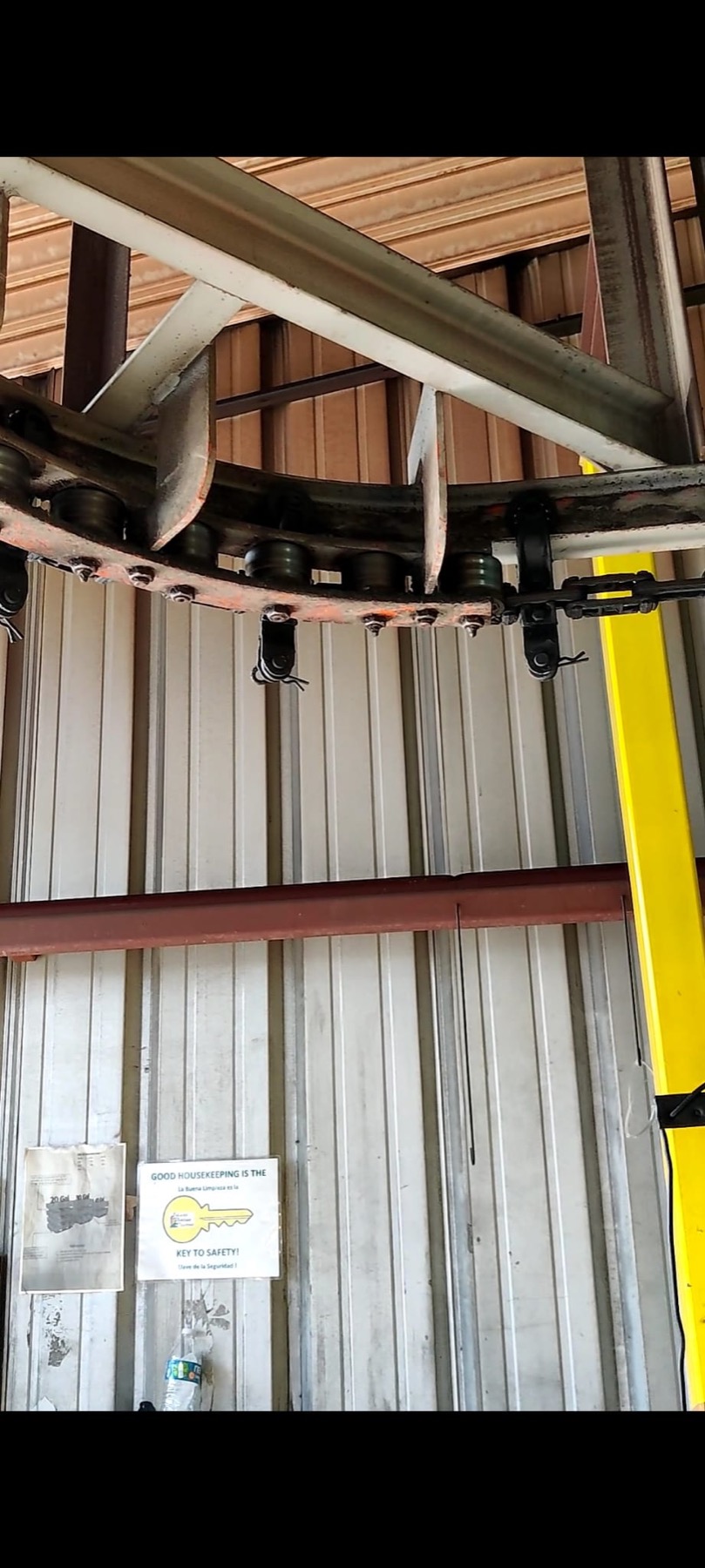
A hybrid-wire architecture. Precision instrumentation sits on the conveyor, and everything past that point moves wirelessly. That keeps the expensive and invasive part of the job confined to a few square feet per line instead of running conduit across a working plant.
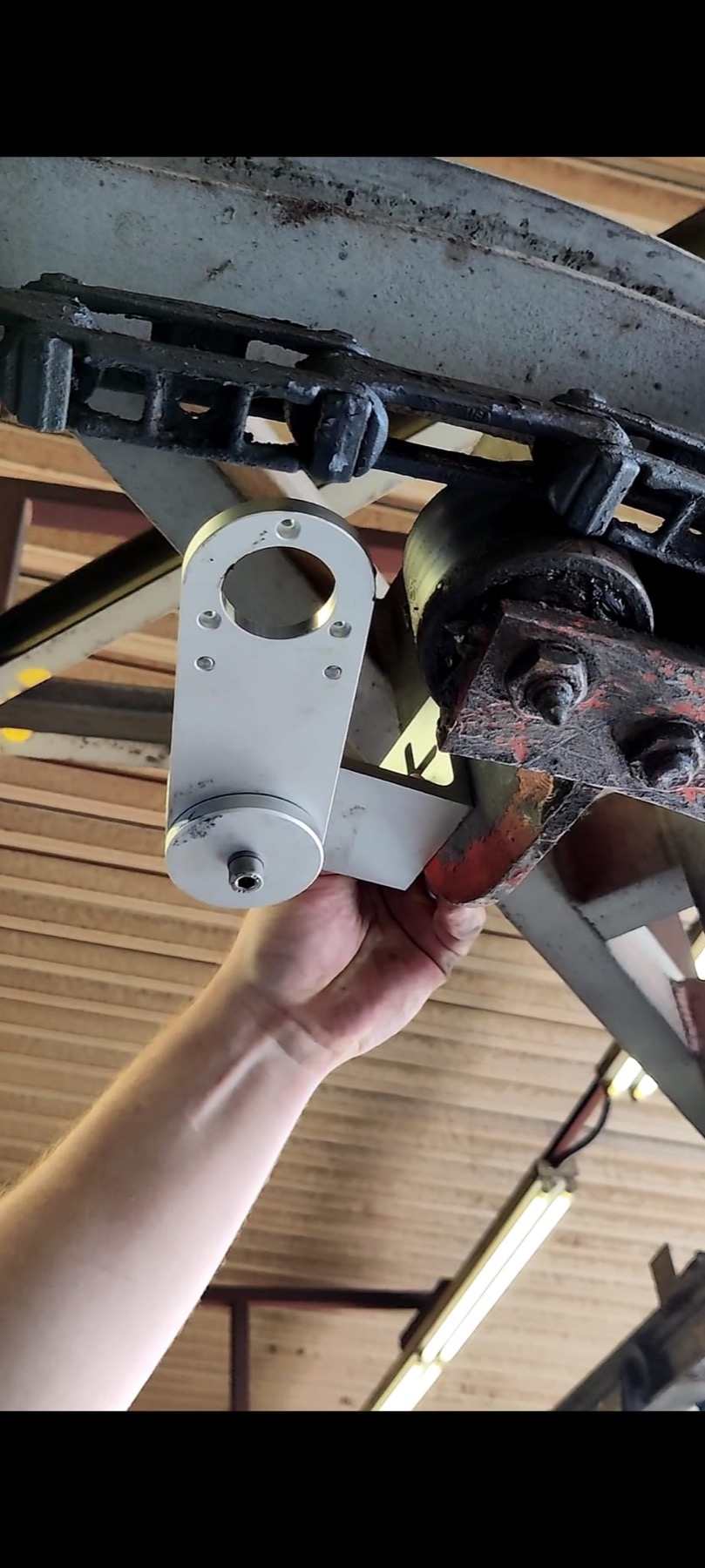
At each attachment site, a Kübler-based RE786 rotary encoder rides on a spring-loaded arm against a rotating shaft. The spring holds contact pressure constant across surface irregularities, which is what makes the reading trustworthy on equipment that has been running for decades. Velocity, position, and direction all come off that one wheel, at up to 2500 pulses per revolution.
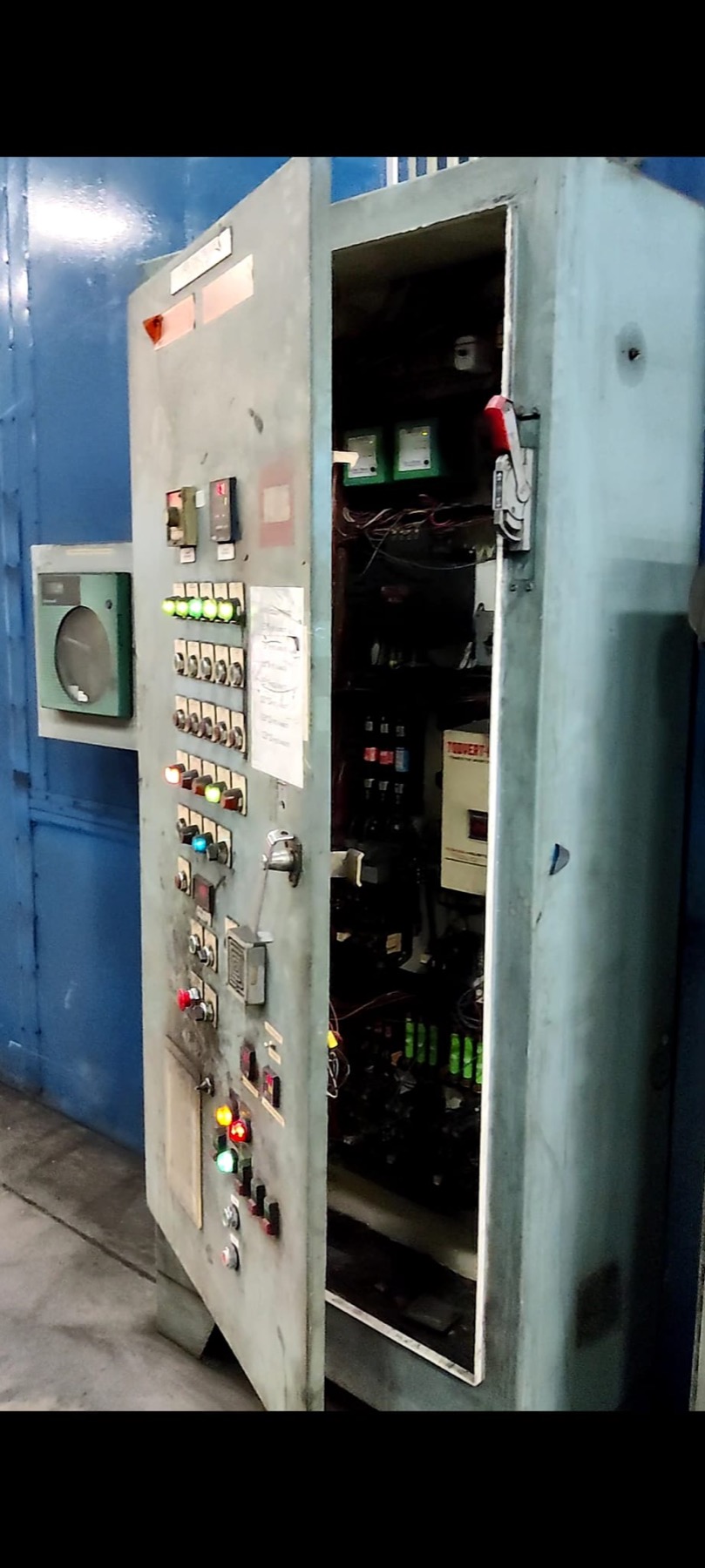
Pulse output runs over RS422 into a Kepler-27 PLC/LCD with an integrated tachometer, mounted on each line’s existing electrical control cabinet. Operators read live speed at 0.51-second resolution right at the line. Lighting patterns are configurable against speed thresholds, so a slow line announces itself to anyone walking past instead of waiting to show up in a report.
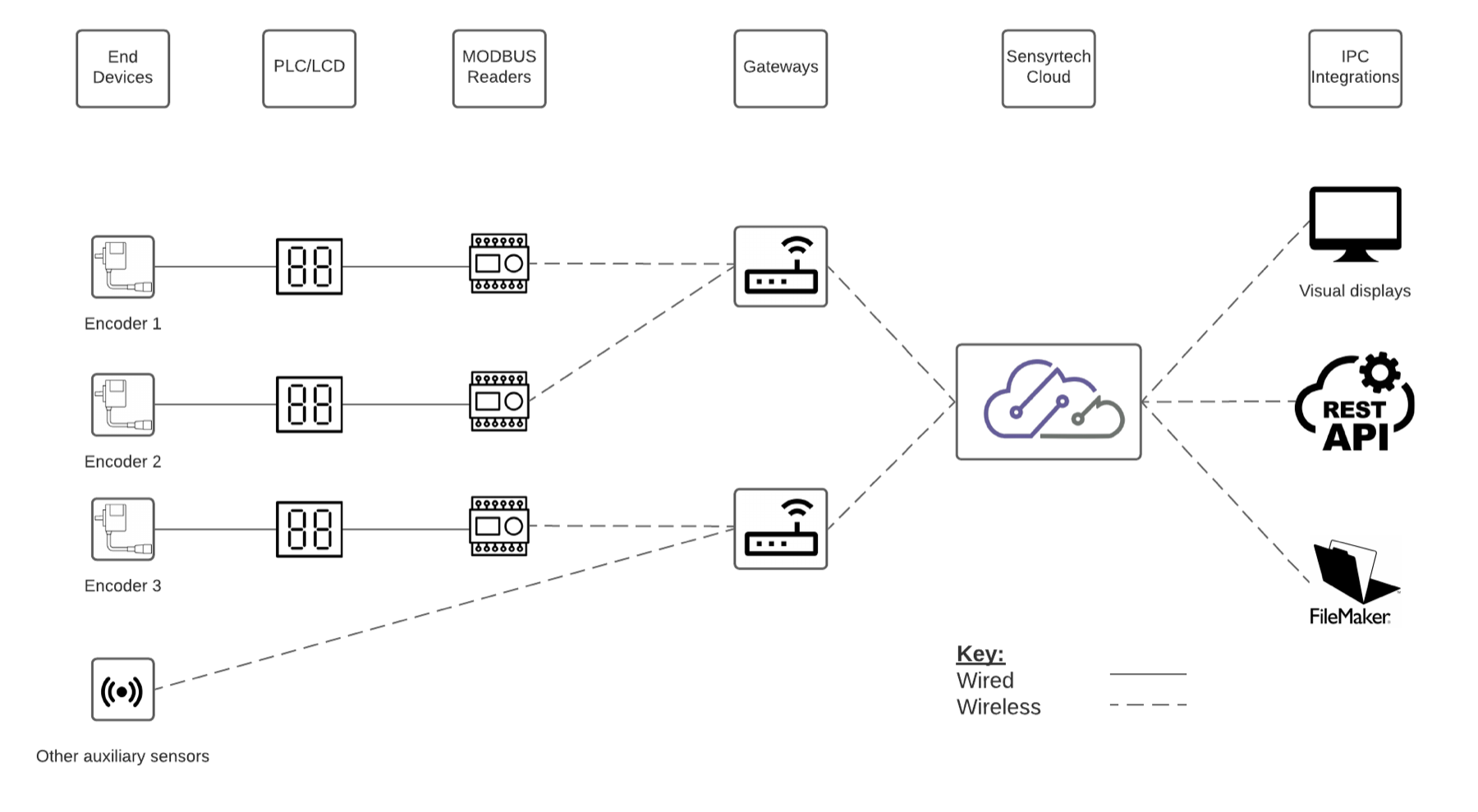
From the Kepler, a Sirius-22 MODBUS-to-LoRaWAN controller carries data to a Proxima-53 cellular gateway, then to the cloud and back into IPC’s FileMaker system on five-minute intervals. Sampling can be tightened when a specific optimization needs finer resolution.
That final hop drove the entire design. The readings landed inside the software IPC’s people already had open all day, which is the difference between a system that gets used and a dashboard that gets bookmarked and forgotten.
Lines 1, 3, and 6 were instrumented, with a secondary attachment site on Line 6. Each line needed its own survey; no two mounting points were alike.
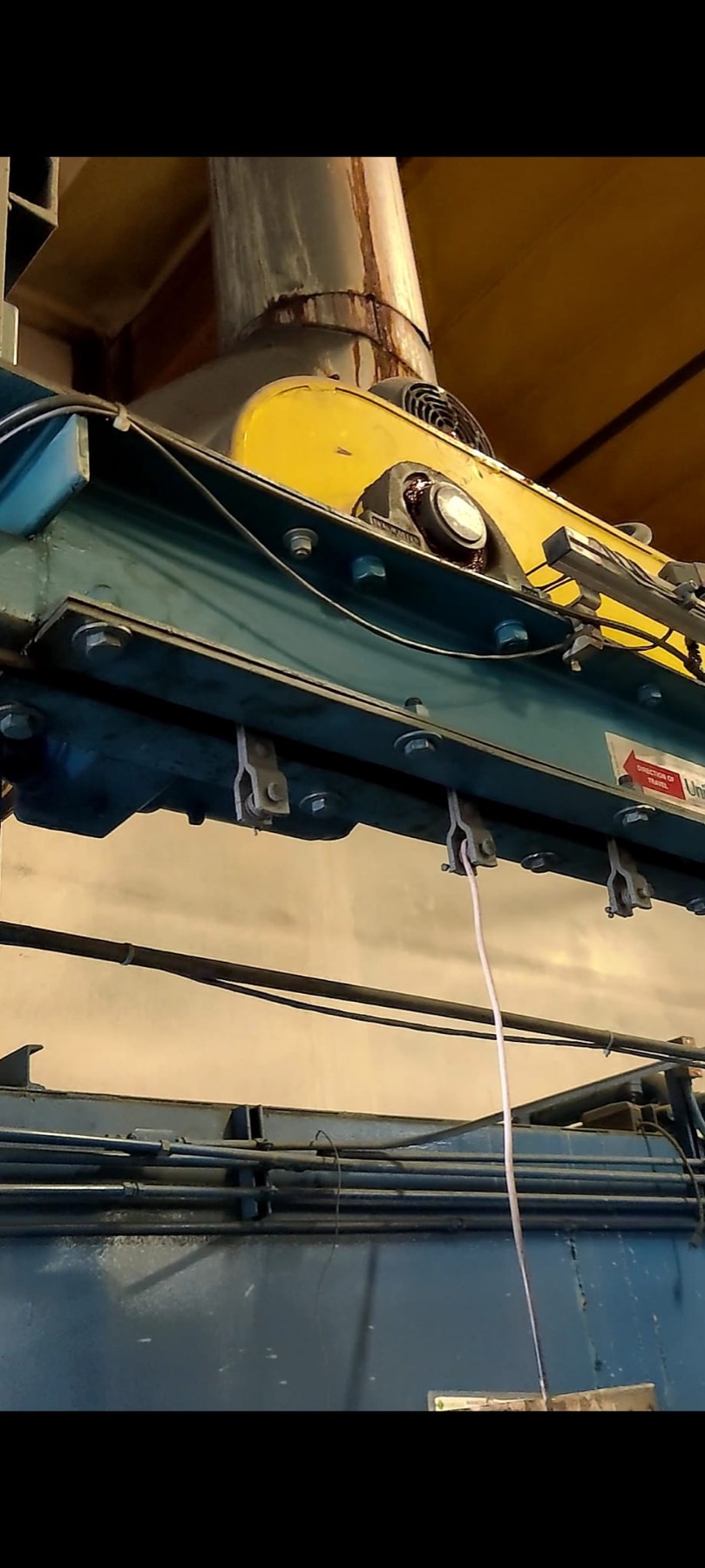
Electrical wiring stayed out of scope and went to IPC’s own electricians. That kept us clear of the licensing question and kept the quote honest about what we were charging for.
Phase two: powder weight and process variables
Once speed data was flowing, IPC extended the engagement rather than putting it back out to bid.
We put Particle Argon edge modules into Torrey FS-500 and FS-1000 powder weight scales, with custom firmware doing algorithmic subtraction to calculate consumption on change. FileMaker could then query historized weight deltas per job at any time, which turned powder from a monthly reconciliation into a per-job number.
Powder is the largest consumable in a coating shop and it was the least instrumented thing in the building. Every operator knew roughly how much went onto a job. Nobody could prove it.
We wired Sirius-22 modules over RS485 MODBUS RTU into the plant’s Industrial Furnace Systems WATTFLOW controllers, pulling five process variables into the same historian:
- Washer pH
- Washer temperature
- Dry-off oven temperature
- Cure oven temperature
- Conveyor line speed
Over- and under-cure is the most expensive repeating failure in powder coating. Scrap parts carry sunk cost in powder, labor, and oven time, and shops usually find out after the batch is already ruined and shipped back. Live oven and washer telemetry moves that discovery forward to the moment the process drifts, which is the only point where anyone can still do something about it.
We designed custom floor display screens for the production monitors so the data reached the people running the lines. IPC supplied the monitors, FireTV sticks, enclosures, mounting, and power.
How it went
The install had friction and the paper trail shows it. Shorted equipment in the Line 1 electrical cabinet forced an additional site visit, which we invoiced and documented rather than burying. On a live production floor in a plant of this age, that is the ordinary case, and a vendor who claims otherwise has not done many of these.
Results
- 3 automatic conveyor lines instrumented for velocity, position, and direction
- 5 process variables streaming from furnace controllers into the plant historian
- Live speed at the line on operator-facing HMIs, plus cloud and mobile
- Per-job powder consumption captured automatically off smart scale systems
- Native ERP integration into IPC’s existing FileMaker MRP, queryable at any time
- Two projects with one client, phase two commissioned off the back of phase one
- Expansion to 3 additional facilities, Letter of Intent signed June 2023
“Having implemented two IoT software and installation projects at the primary facility in Ontario, CA, we’ve been able to demonstrate the effectiveness and efficiency of our technology and services.”
Letter of Intent for expansion to three additional IPC facilities, June 2023
What made it work
Industrial IoT pilots stall when the data has nowhere useful to go. IPC already ran a working ERP with a team fluent in it. We metered the machines and delivered the readings into the software they trusted, and left their system of record alone.
Phase two followed. Then a signed LOI for three more plants.
Technologies: LoRaWAN, MODBUS RTU, RS422, RS485, rotary encoders, PLC/HMI, cellular gateway, edge compute, FileMaker MRP integration